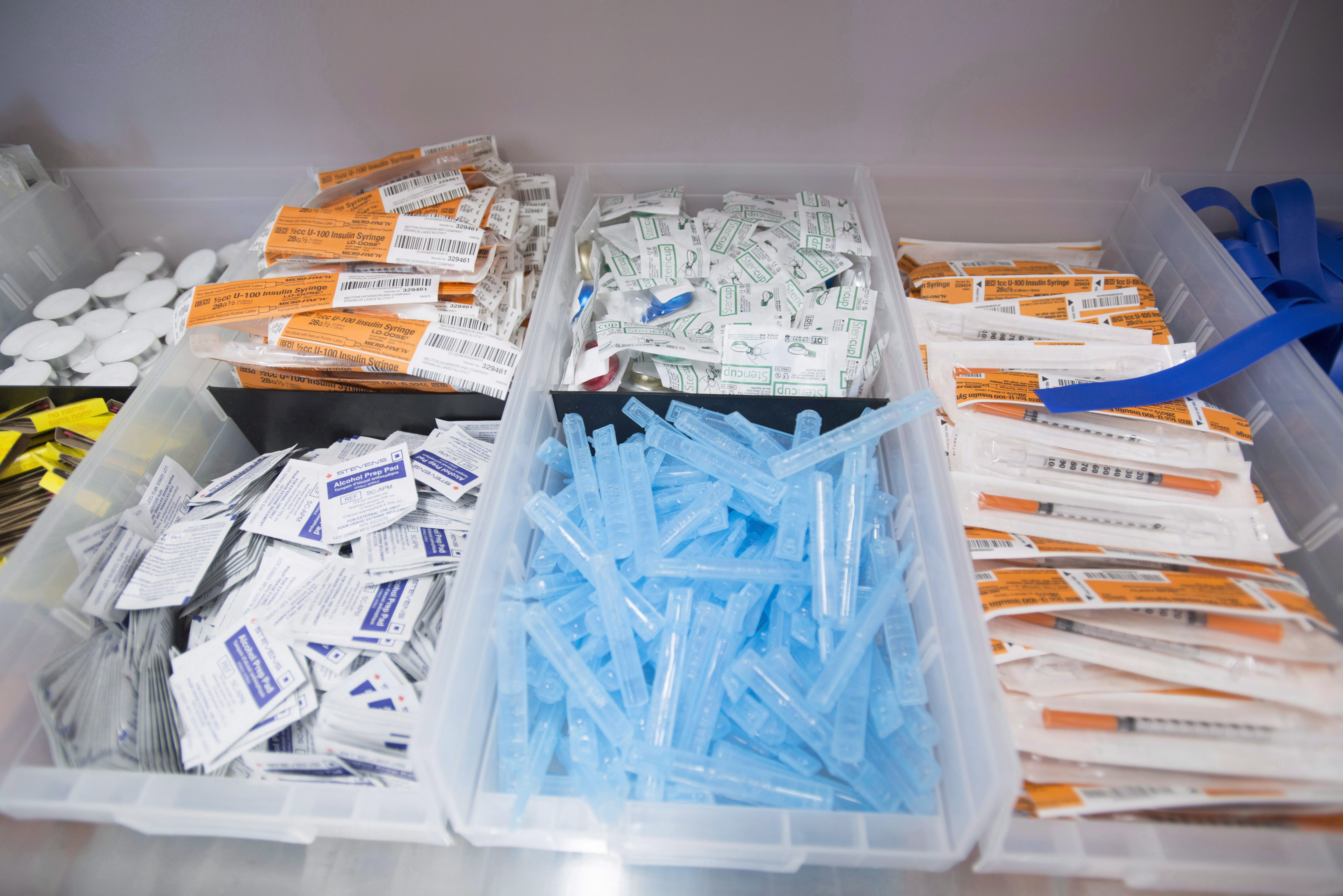
The Canadian Centre of Recovery Excellence (CoRE) said a study it conducted found the closure of an overdose prevention site in Red Deer, Alta., did not result in an increase deaths, emergency department visits or ambulance calls for site users.

“After the site was closed, there was a significant number of people who had used the overdose prevention centre who were now taking evidence-based treatment medication,” CoRE chief scientific officer Nathaniel Day said.
“I think the very people that society is trying to reach with harm reduction services like supervised consumption can be helped, and they can move towards the life they and their family has them.”
The study looked into two provincially regulated OPS programs in the province, in Red Deer and Lethbridge. Red Deer’s closed in 2024, and the one in Lethbridge remained open.
CoRE studied the outcomes for the Red Deer clients but also compared them to clients using the similar program in the Lethbridge program.
Story continues below advertisementThe government of Alberta is praising the study. Mental Health and Addictions Minister Rick Wilson said he has to review the study to consider if other supervised consumption site should also close.

Get daily National news
Get daily Canada news delivered to your inbox so you'll never miss the day's top stories. Sign up for daily National newsletter Get Started By providing your email address, you have read and agree to Global News' Terms and Conditions and Privacy Policy.“Having a report like this with evidence-based and taking a look to make sure that we’re not doing harm I guess is important to me, so that’s one of the things I’ll be considering,” Wilson said.
Wilson also said in a statement to Global News, it thanks CoRE for “producing rigorous, high-quality research that helps inform responsible and evidence-based addiction policy.”
Dr. Monty Ghosh, an addiction specialist, said the study was well done, and it’s important to note there was more support for site users.
“One of the things that they did involve during the transition period was this rapid response team, so that did consist of two clinicians who were going around the site, responding to overdoses on a regular basis, they were there 24/7,” Ghosh said.
More on Canada More videos- Loitering outside Calgary pharmacy raises concerns over safety
- Métis cabaret ‘Rubaboo’ at Persephone Theatre celebrates Indigenous culture
- Overpass strike backs up Saskatoon’s Circle Drive for second time in a week
- Quebec watchdog submits report into police shooting of 15-year-old Nooran Rezayi
-
![]() Senior Iranian official loses attempt to ban public from deportation hearing
Senior Iranian official loses attempt to ban public from deportation hearing
-
![]() ‘It’s not easy’: Carney speaks frankly about dealing with Trump
‘It’s not easy’: Carney speaks frankly about dealing with Trump
-
![]() Canadians continue to avoid U.S. travel
Canadians continue to avoid U.S. travel
-
![]() ‘Industry pressure’ slowing efforts to keep animal tranquillizers out of drug supply
‘Industry pressure’ slowing efforts to keep animal tranquillizers out of drug supply
 Senior Iranian official loses attempt to ban public from deportation hearing
 ‘It’s not easy’: Carney speaks frankly about dealing with Trump
 Canadians continue to avoid U.S. travel
 ‘Industry pressure’ slowing efforts to keep animal tranquillizers out of drug supply
Ghosh does warn that just because this study is out there, it shouldn’t be a reason to shut down other supervised consumption sites.
“We need more evidence as much as we can. Whether it’s good or bad, whether it speaks for or against supervised consumption sites and I don’t think this one does either to be honest with you.”
Story continues below advertisement–with files from Jasmine King
 1:58
Huge turnout, contentious debate over Red Deer’s overdose prevention site
1:58
Huge turnout, contentious debate over Red Deer’s overdose prevention site