- Voices
- The Independent View
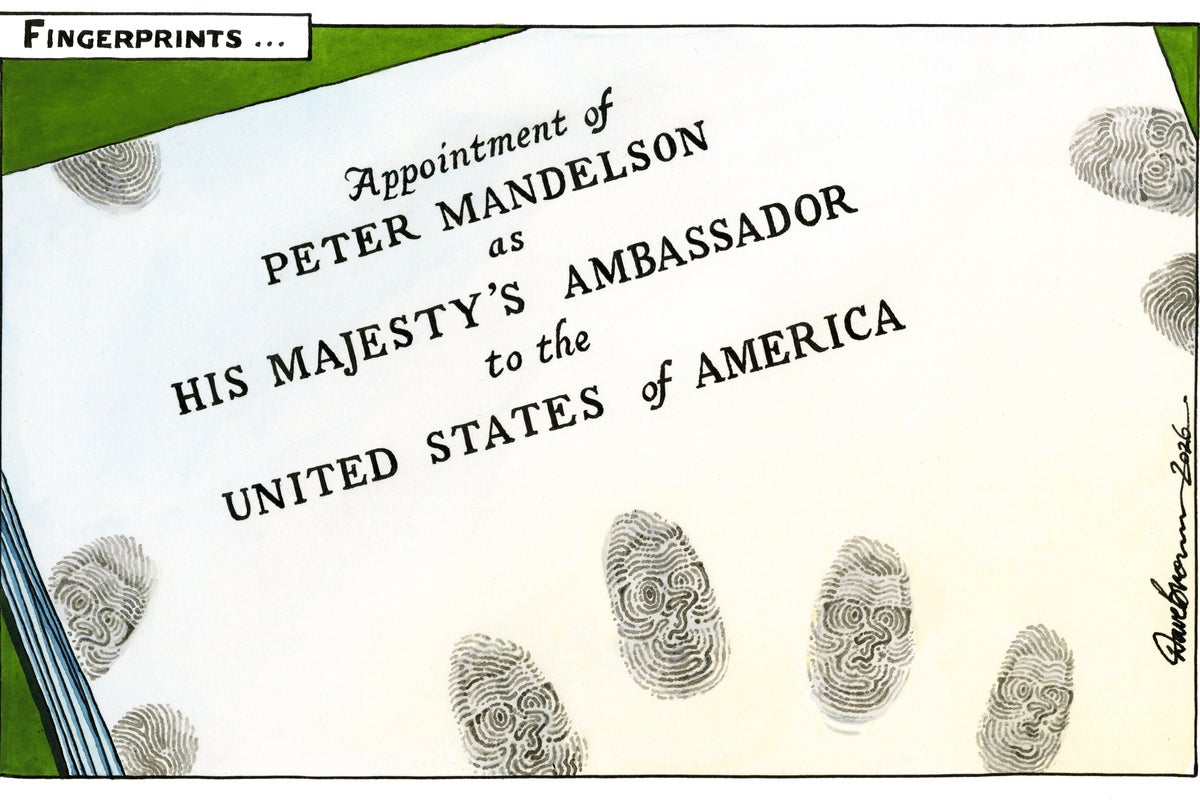
Editorial: The first tranche of ‘Mandelson papers’ has raised further questions about the prime minister’s judgement – and it is time that his mistake in appointing the former ambassador was explained in full, and by Starmer himself
Wednesday 11 March 2026 20:48 GMT- Bookmark
- CommentsGo to comments
Bookmark popover
Removed from bookmarks
Close popoverMandelson ‘should have never represented UK’, says minister
Sign up for our free Voices newsletter for expert opinion and columns
Sign up for our free weekly Voices newsletter for expert opinion and columns
Sign up to our free weekly Voices newsletter
Email*SIGN UPI would like to be emailed about offers, events and updates from The Independent. Read our Privacy notice
A general reputational risk” is how, with typical British understatement, the civil service described the potential pitfalls to Sir Keir Starmer when he was contemplating appointing his former friend Peter Mandelson as Britain’s ambassador to Washington.
This “revelation” emerges from the first tranche of the Mandelson papers to be released – and, it is fair to say, it cannot have come as a shock to Sir Keir, or to anyone with even a passing acquaintanceship with Lord Mandelson over his long and eventful career in public life. Even the former minister’s fan club in the media conceded that he was a risky person to be entrusted with such a delicate role, whatever his formidable gifts and mastery of the “dark arts” of politics.
Lord Mandelson’s known association with the American financier and convicted sex offender Jeffrey Epstein – confirmed in the papers presented to Sir Keir during the recruitment process – was but the latest red flag, after two ministerial resignations, that should have ruled him out of the role.
Sir Keir’s defence, on the previous occasions when he has been confronted about this most disastrous of decisions, is that in appointing Lord Mandelson to Washington, he made a mistake – one he deeply regrets.
As well he might. We know that the prime minister knew, for example, that Lord Mandelson had stayed in Epstein’s flat in 2009, after Epstein’s conviction for procuring a child for prostitution. This makes Sir Keir’s no doubt sincere wish to “put the victims first”, as his government seeks to reform the justice system, sound more hollow than it should.
Sir Keir adds that he and his staff, acting on his behalf, were lied to by Lord Mandelson. But this only raises more questions.
 Darren Jones, chief secretary to the prime minister, updated the Commons on the release of government documents relating to Peter Mandelson’s appointment as ambassador to the US (Parliament TV)
First, during the vetting process, what was asked of Lord Mandelson, and what assurances did he offer? Unfortunately, only a tiny circle of people have seen the contents of these interrogations of the candidate-ambassador, because the relevant documents are being withheld on the advice of the Metropolitan Police. So it is impossible for anyone to independently, and adequately, assess how searching the questions were – and how inaccurate, or worse, were Lord Mandelson’s answers.
But we don’t know yet what was said by whom, and to whom they said it.
If such queries were made not by Sir Keir himself but by his chief of staff, Morgan McSweeney, then that is also potentially problematic, given that Mr McSweeney was basically a protege of Lord Mandelson – one who had been his close political ally for some years.
Second, and more pertinent, the wider question arises as to why Sir Keir, an experienced lawyer and formerly chief prosecutor for England and Wales, should have been so seemingly careless – gullible, even – to think that this was an adequate method of getting at the whole truth of Lord Mandelson’s dealings with a convicted sex offender. How could the prime minister content himself to be such a passenger in that process?
The government concedes – again, in bland bureaucratese – that the due diligence undertaken in this case “fell short of what was required”. Well, you can say that again. But many will be left wondering, ironically, why such enhanced due diligence was in any case needed when the basic facts of Lord Mandelson’s life ought to have been sufficient, and sufficiently known, to disqualify him.
By the time Darren Jones, the chief secretary to the prime minister, sat down in the Commons after making his statement, the slamming shut of stable doors could be heard echoing all the way along Whitehall. Mr Jones assured the House that this must not happen again, that the national security vetting process is to be reviewed, that the Ethics and Integrity Commission is being tasked with tightening financial disclosures, lobbying and business appointment rules, and that further reforms will “build on an ambitious programme of standards and ethics reform”.
There’s nothing wrong with any of that. But too many questions persist about the prime minister’s judgement, and need to be cleared up first – by Sir Keir himself.
It was unfortunate, to say the least, that the Mandelson papers were made public only after Prime Minister’s Questions – rather than, say, first thing in the morning – denying the leader of the opposition her chance to get some answers at the weekly head-to-head. Similarly, it was a discourtesy to parliament to give opposition parties barely 20 minutes to sift through a lengthy PDF before they were able to press Mr Jones on the specifics.
And it should have been Sir Keir, not his apparatchik, at the despatch box. We still do not know enough about what the PM knew, and when. He still needs to give a full account of himself, within the constraints of any police investigation – and in person. Sir Keir owes that to his country, to his party, and to himself.
In short, Sir Keir, what were you thinking?
More about
Peter MandelsonKeir StarmerMorgan McSweeneyJeffrey EpsteinJoin our commenting forum
Join thought-provoking conversations, follow other Independent readers and see their replies
Comments